Transform Scotland’s Emilia Lauder explores what Scotland’s transport trends reveal about the country’s continuing reliance on private cars.
Scotland is investing millions in electric buses, EV infrastructure and cleaner vehicles, but we are driving now more than ever. While these changes are proving advantageous for the future of renewable energy, rising traffic volumes and an increase in car-centric behaviours continue to undermine many of those gains.
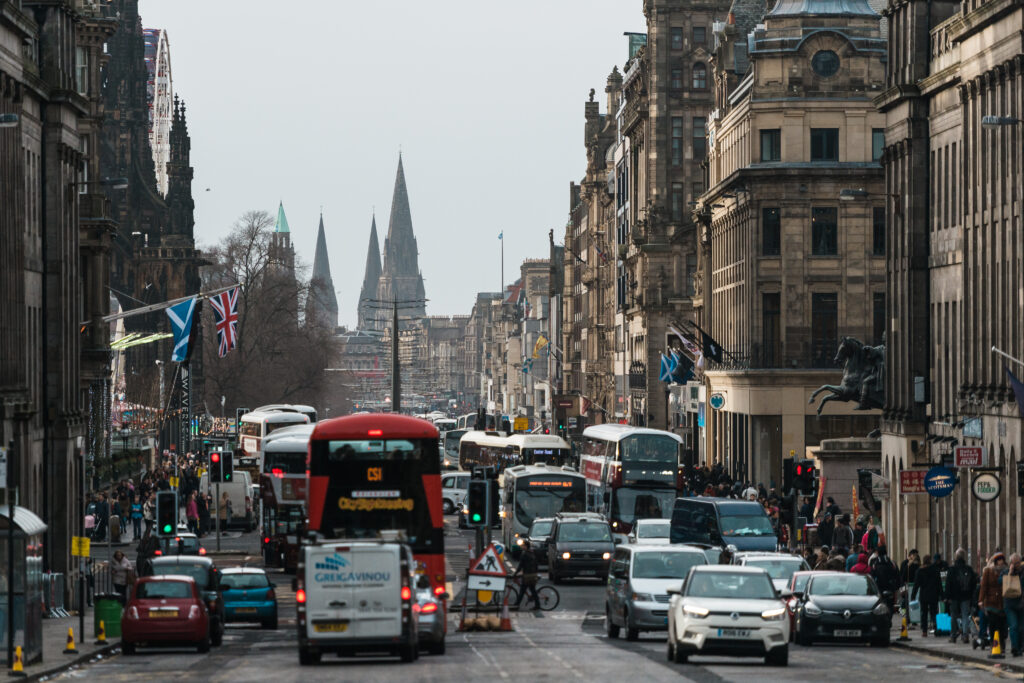
Just a few years ago, Scotland promised to cut car kilometres by 20% by 2030. That target was later dropped after Audit Scotland concluded that the target was unachievable without stronger policies to support it. While that commitment has been scrapped, the challenge persists. Traffic levels remain above pre-pandemic levels as transport continues to be one of Scotland’s largest sources of greenhouse gas emissions and harmful air pollution. Policymakers are still grappling with how to persuade people to drive less when so much of daily life depends on private car use.
Scotland now has more vehicles than ever
In 2024, 3.2 million vehicles were licensed in Scotland, the highest figure on record, culminating in a substantial 12% increase from a decade ago. While total traffic reached 49.3 billion vehicle-kilometres, up 2% from the previous year.
Improvements in vehicle efficiency can only go so far if the total amount of driving continues to increase. Electric vehicles reduce tailpipe emissions, but they do not reduce congestion, road danger, land use pressures, or the wider social dependence on car travel. This is the key disconnect.
Rising traffic volumes are now crowding out many of the environmental gains made through cleaner engines and technology.
Transport pollution is changing, not disappearing
In June 2025, Transport Scotland reiterated its commitment to traffic reduction, yet with car use figures topping pre-pandemic levels, we need to see a clear road map with actions for tackling car dependency.

Cleaner vehicles are essential, but they cannot solve every problem created by growing traffic volumes.
While exhaust emissions have fallen significantly since 1990, another little-known problem is becoming more prominent: non-exhaust pollution. Tyre dust, brake pad wear and road surface wear now make up 69% of PM10 emissions from transport. These emissions are produced regardless of whether a vehicle is petrol, diesel or electric. While a heavier electric SUV may produce fewer exhaust emissions than a petrol equivalent, it still contributes to particulate pollution.
Impact on public health
Transport remains one of Scotland’s most significant sources of harmful air pollution, producing 68% of nitrogen oxide emissions and almost a quarter of PM10 emissions and 29% of PM2.5 emissions. These pollutants are closely linked to respiratory illness, cardiovascular disease and worsening conditions such as asthma, particularly in densely populated urban areas and among children.
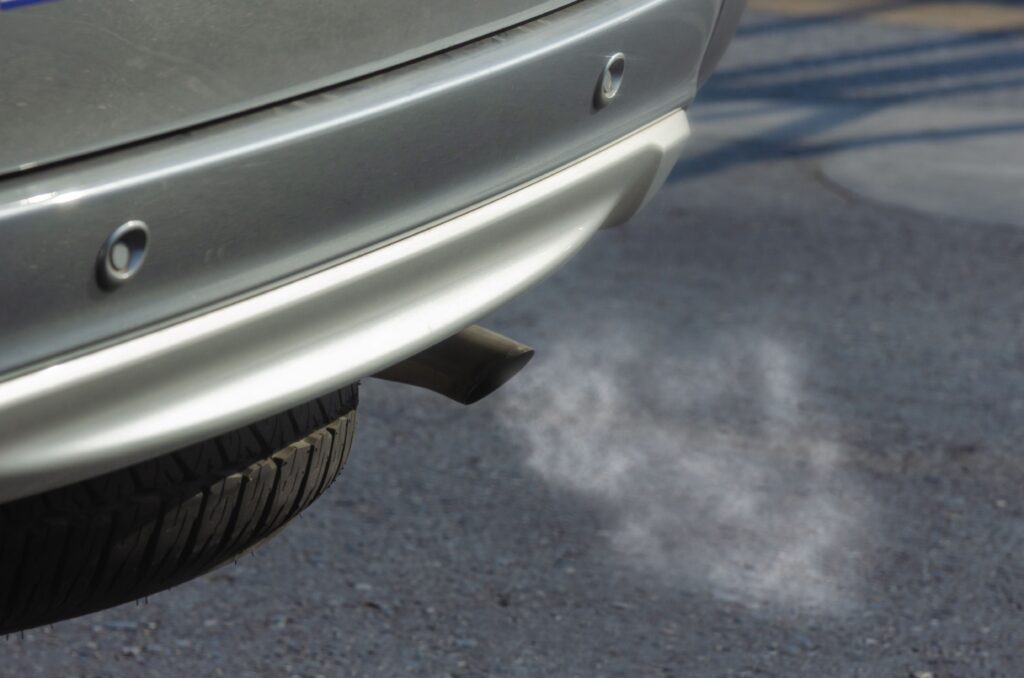
Public awareness of air pollution has grown significantly in recent years, but discussions around transport often focus primarily on tailpipe emissions. Non-tailpipe emissions receive far less attention, despite becoming an increasingly significant source of pollution.
The figures make one thing clear: Scotland cannot rely on electrification alone if it truly values public health and a future of active travel.
The harder truths ministers still avoid
The latest transport trends are not simply a snapshot of travel patterns. The figures reveal the widening gap between Scotland’s climate ambitions and the reality of how people move around the country.
The transition to cleaner vehicles is happening, but not quickly enough to outweigh the continued growth in car mileage. Meanwhile, public transport investment remains uncertain and active travel infrastructure is unevenly distributed.

If Scotland is serious about reducing transport emissions, policymakers must confront the deeper structural dependence on private cars and encourage a culture and infrastructure of active travel for all.
Left unchecked, this dependence will continue to translate into rising traffic, dangerous driving patterns, shrinking road space, growing pressure on vulnerable road users, pollution and poor public health.
The evidence suggests that Scotland is making progress in decarbonising the vehicles on its roads, but much less change in shifting perceptions around transport options. Scotland has yet to meaningfully reduce its cultural and social reliance on cars.