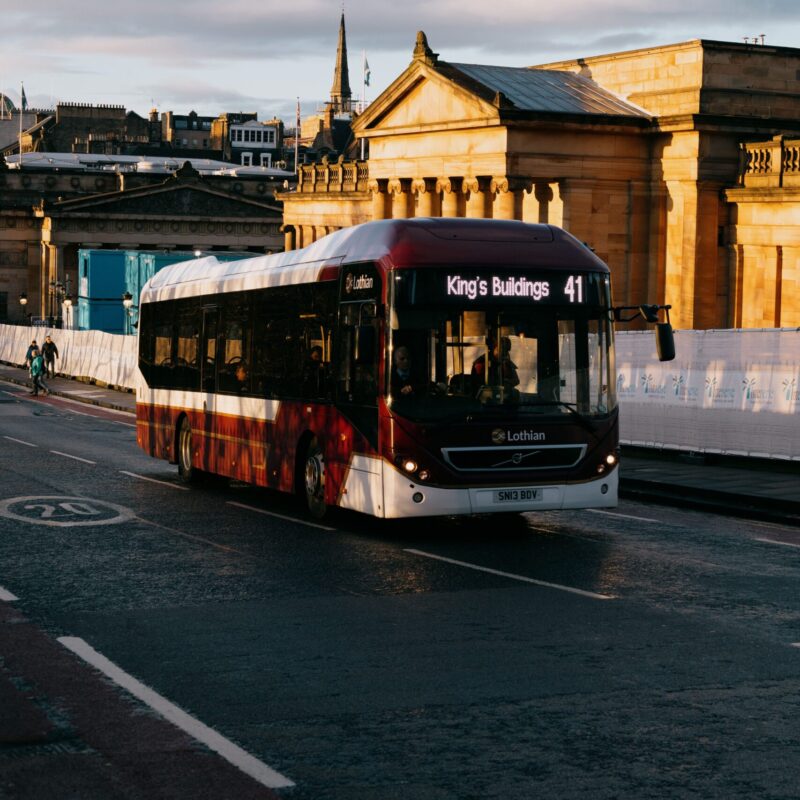
As Catch the Bus Month gets underway, our director Colin Howden, takes stock of Scotland’s bus network and sets out five priorities that demand urgent attention from government, transport authorities and operators alike.
September marks Catch the Bus Month, an opportunity to celebrate the role buses play in connecting communities across Scotland. But if we want more people to choose the bus, Scotland must provide a network that makes that choice possible.
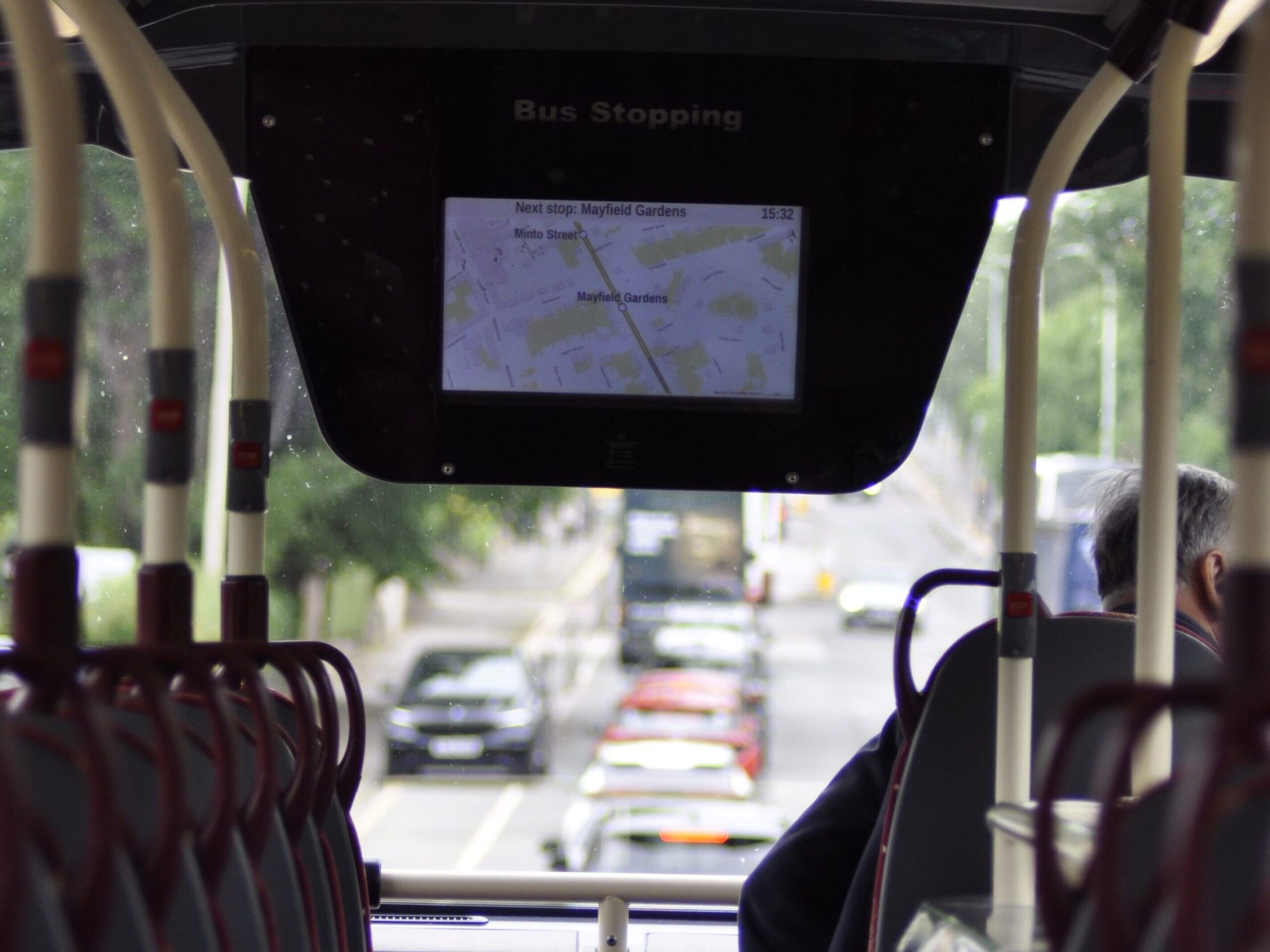
Here are five priorities requiring urgent attention.
1. Make the bus faster than the car
Traffic and congestion remain the main reason why people don’t take the bus. When buses are caught in the same congestion as cars, journey times increase, reliability suffers and public transport becomes less competitive.
Bus priority — including bus lanes, junction and signal priority — is therefore essential. We welcome the £55 million Bus Infrastructure Fund, but lessons must be learned from its predecessor: of the £500 million promised through the Bus Partnership Fund, only £27 million was spent.
Scotland needs targeted, accountable investment that makes the bus genuinely competitive with the car.
2. Answer the questions raised by the £2 fare cap
Making bus travel affordable matters, and the £2 fare cap is a bold intervention. But what use is a £2 fare if there is no bus?
Before a national roll-out, Ministers should evaluate the Highlands and Islands pilot and consider whether investment could have greater impact by improving frequency, reliability and journey times.
A national entitlement does not guarantee equal benefits when the quality of bus networks differs significantly between regions. Fare reform must therefore be equitable and matched by reliable services.
3. Stop delaying integrated ticketing
Scotland has prevaricated on integrated ticketing for two decades. The technology already exists: we have the Saltirecard, comprehensive contactless payment, and examples of smart ticketing with other modes.
Yet a genuinely integrated national system remains years away.
Scotland needs decisive action to create an integrated system that allows passengers to move easily between operators and modes. The challenge is now institutional and political rather than technological.
4. Recognise that bus reform will vary across the country
Franchising may work for some parts of Scotland, but no single model will suit every region. SPT is already pursuing franchising in the West, while South-East Scotland benefits from the successful publicly-owned Lothian Buses model. What works for Strathclyde will not automatically work for Edinburgh or elsewhere.
Transport authorities need the tools, resources and guidance to choose the model that works locally, alongside accountability, for delivering an effective network.
5. Give rural buses greater focus
People should not be expected to reduce their dependence on cars when there is no viable or accessible alternative.
Rural Scotland faces distinct challenges, including lower population densities, longer distances and dispersed destinations. Scotland therefore needs a dedicated Rural and Islands Mobility Plan, minimum connectivity standards, and stable, multi-year funding for socially necessary services.
Scheduled buses should also form part of a wider network incorporating community and shared transport, taxis, active travel, rail and ferries.
Catch the Bus Month should be about more than persuading people to get on board. If Scotland wants people to choose the bus, it must build a bus network worth choosing.