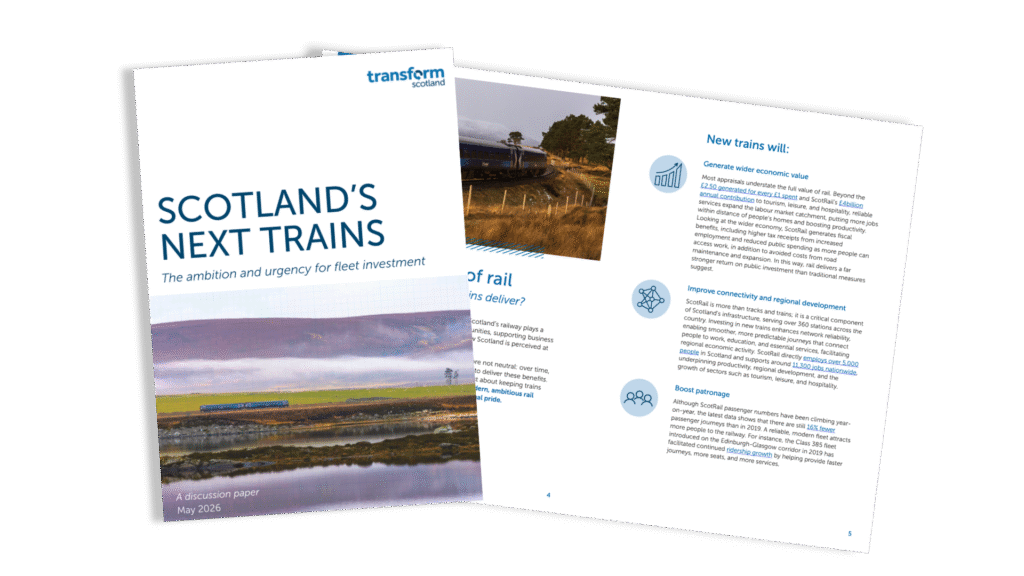
The challenge facing Scotland’s rail network is no longer about whether new trains are needed; it’s about how we actually deliver them.
Scotland is running some of the oldest rolling stock in the UK, with roughly two-thirds of the current fleet requiring replacement over the next 15 years. This isn’t a distant problem for future policymakers; it’s a structural reality hitting the network today. With public finances under unprecedented pressure and transport budgets competing directly with health and social care, the temptation to defer long-term capital investment is high.
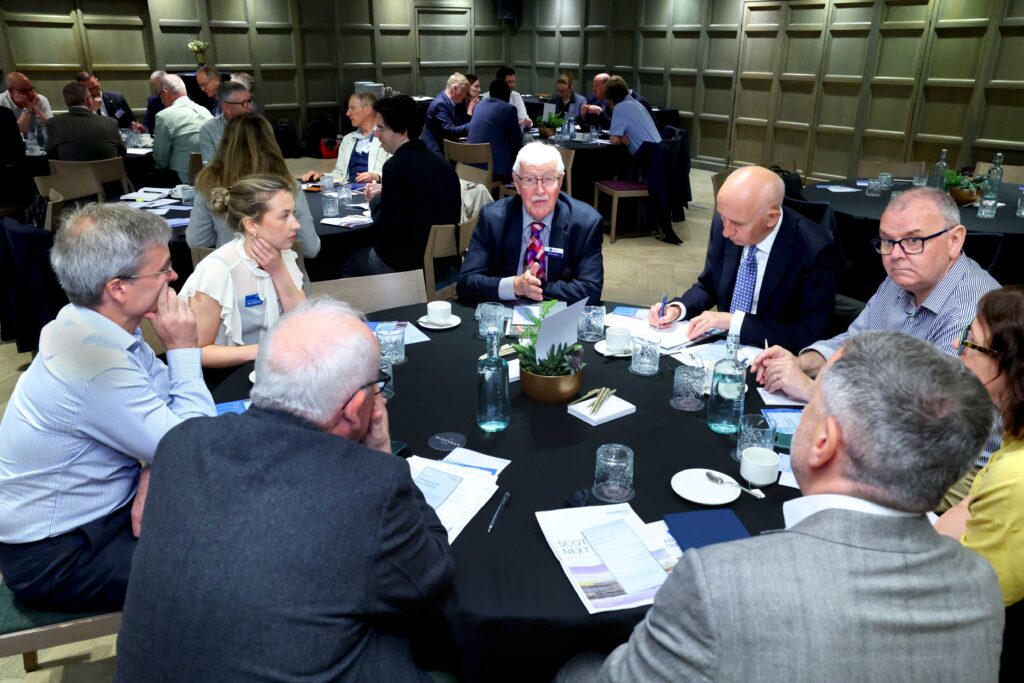
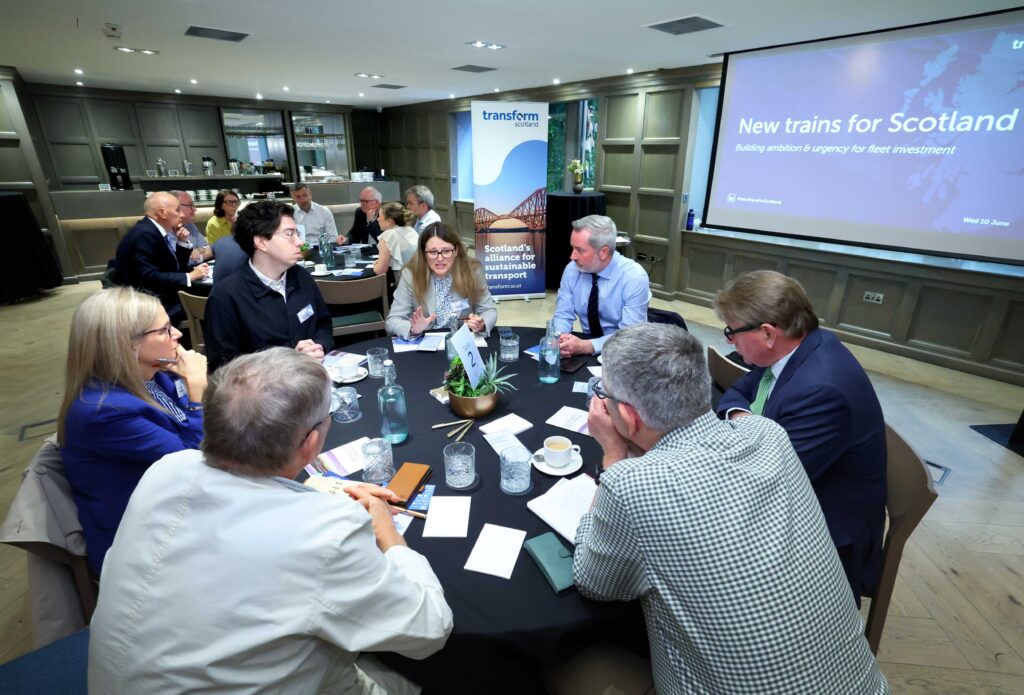
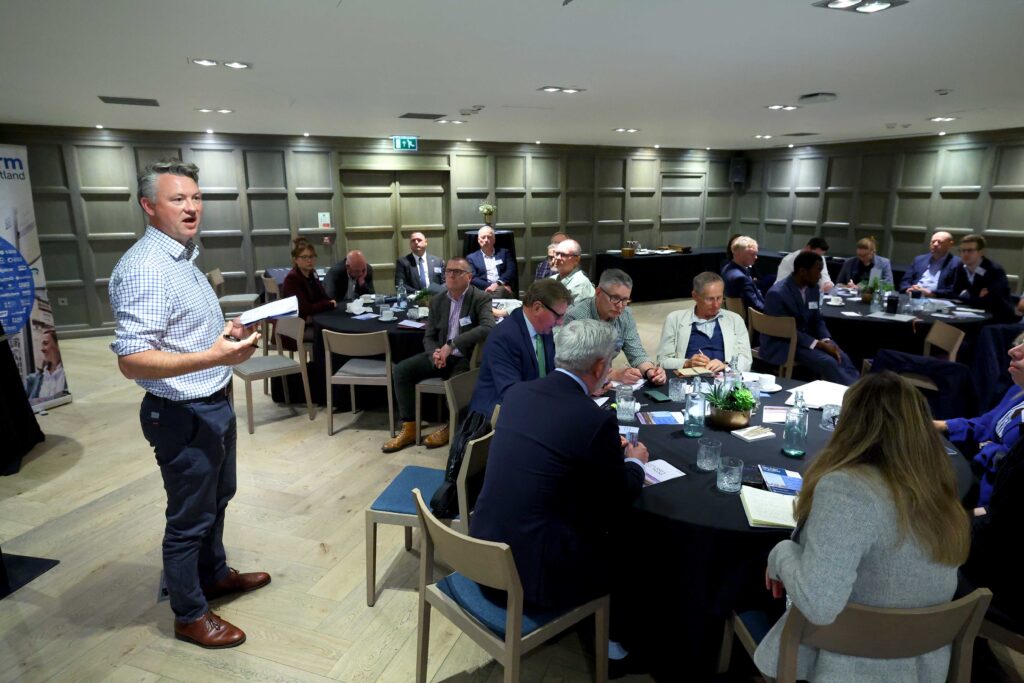
That’s why this June, we brought together over 40 senior leaders at The Scotsman Hotel for our New Trains for Scotland stakeholder working lunch.
Rather than treating this as a niche rail issue, we hosted a cross-sector room of operators, manufacturers, financiers, accessibility advocates, passenger groups, and environment and health interests.






















Why new trains matter beyond transport
One of the strongest takeaways from our roundtable discussions was that a train is never just an operational asset, it is foundational infrastructure for the entire country. The benefits of strategic investment, and the severe penalties of inaction, ripple across every sector:
- Economy & tourism: A modern network expands regional labour markets, access to jobs, and drives productivity. Moreover, for Scotland’s scenic routes in particular, getting the fleet specifications right is crucial to unlocking and supporting the leisure tourism market.
- Public health & climate: Replacing ageing diesel units improves air quality around our stations, whilst investing in the railway encourages the modal shift needed to (i) discourage more sedentary lifestyles associated with car use and (ii) meet our climate commitments.
- Passenger experience: Upgrading the fleet is a unique opportunity to build a network that actively competes with private cars. Discussions focused heavily on the necessity of consulting passengers in design (as done in Liverpool), system-wide level boarding, robust multi-modal journey tracking (including visual, audible, and BSL formats), reliable air conditioning, quality wi-fi connections, as well as comfortable seating!
Read more about the benefits of new trains for Scotland in our latest discussion paper here.


The cost of delay
A key theme of the day was that delaying fleet renewal doesn’t eliminate costs; it simply shifts where they hit the balance sheet. When we defer strategic capital investment, public money is instead drained by rising day-to-day operational and maintenance spend just to keep near-obsolete assets moving. In essence, we end up spending more to maintain a lower standard of service, while missing out on a clear (albeit underestimated) economic multiplier effect and damaging supply chain confidence. Planning early and strategically is simply cheaper than waiting for asset depreciation to turn into crisis management.
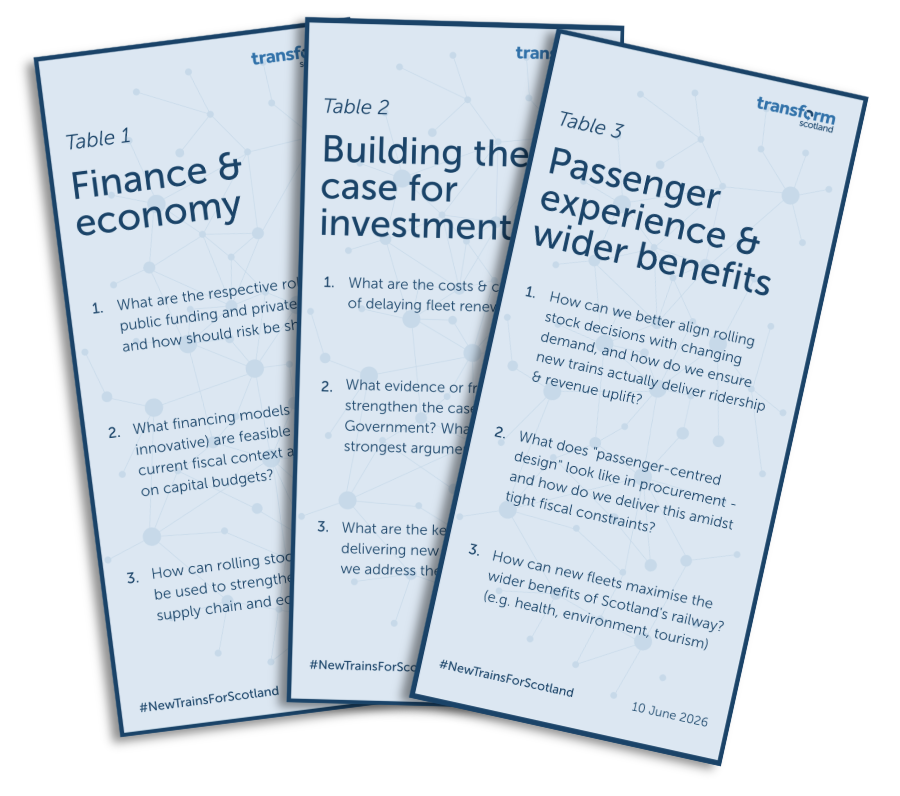
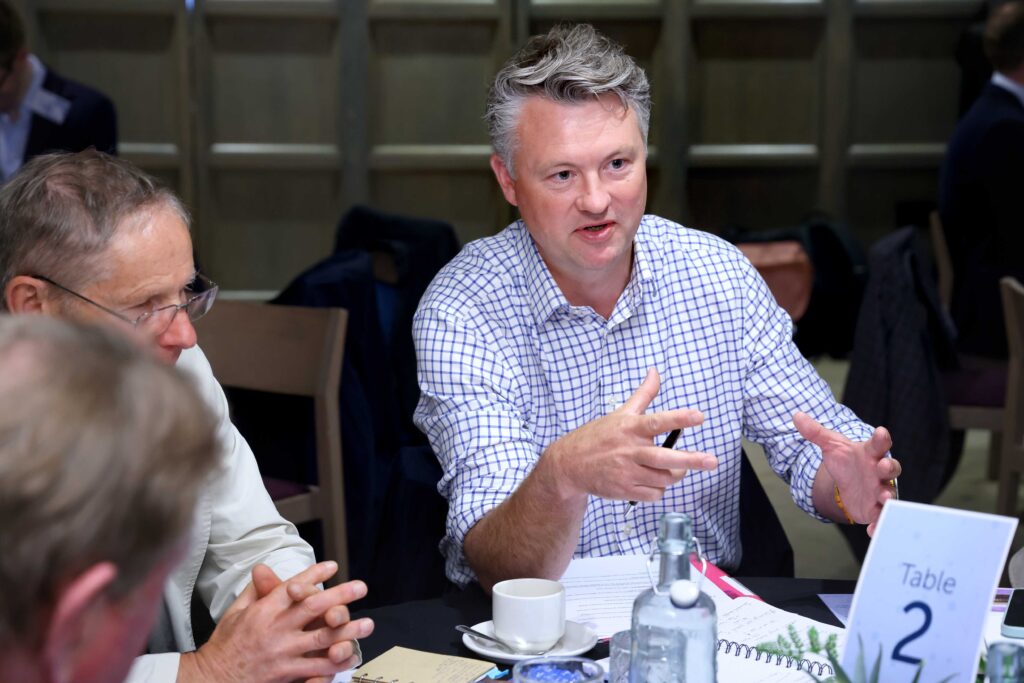
Because immediate public capital is tightly constrained, and the Scottish Government is facing a £5bn black hole in its budget by 2029-2030, the room were frank that there were no easy answers. Instead, attendees debated practical, innovative delivery models – including structures that split risk between the government and private finance, EUROFIMA, borrowing capabilities, ROSCOs evolution and wider mechanisms like Land Value Capture.
What next?
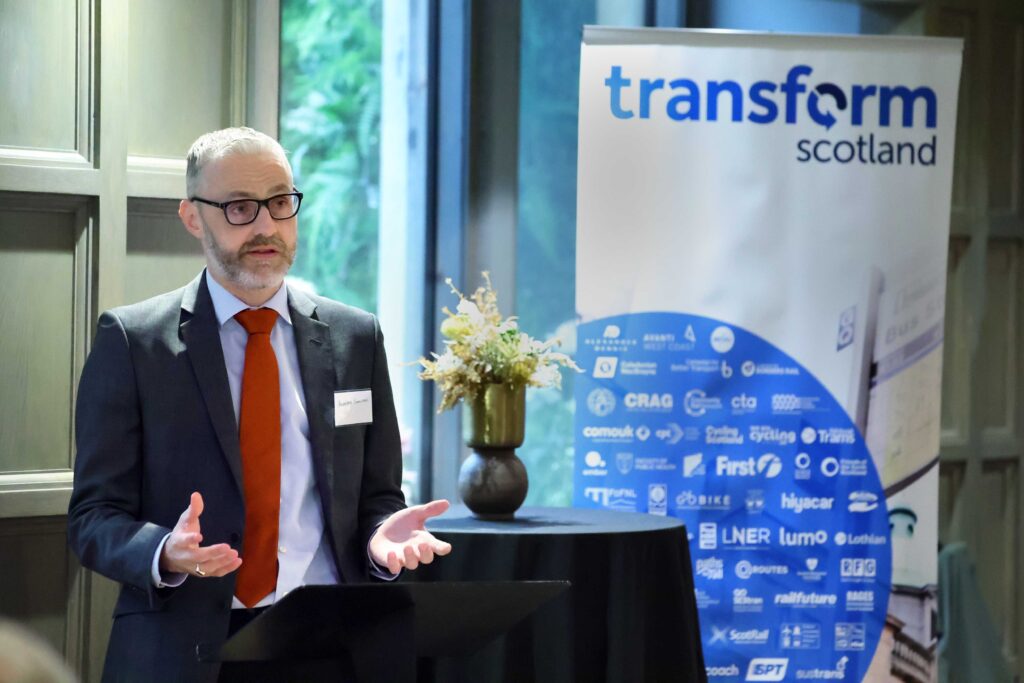
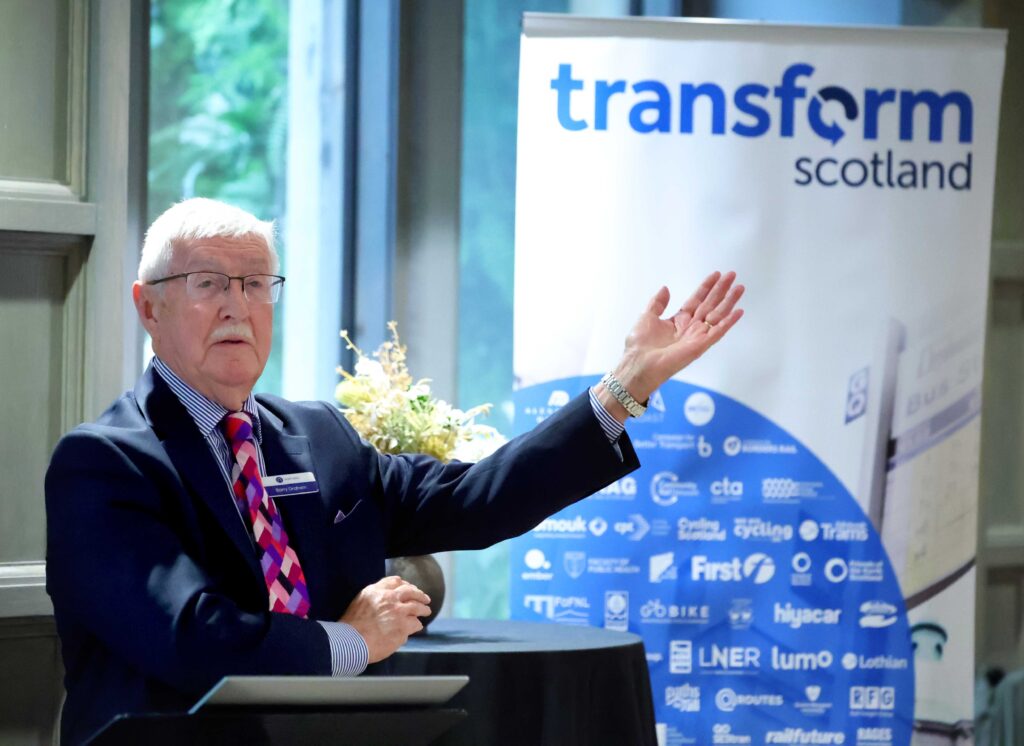
Many thanks to everyone who contributed to such a thoughtful, constructive discussion, to our chair George Lowder, and speakers Laura Hyde-White (Transform), Alastair Camelford (Transport Scotland) & Barry Graham (Northern) for framing the debate.












We look forward to building momentum around this issue with the cross-sector alliance established at this event. We are incredibly pleased that Transport Scotland and Scottish Rail Holdings are actively engaged with us on this, and we welcome ongoing discussions with them and other decision-makers.
Ultimately, the insights and evidence gathered from the day will directly shape our upcoming report this autumn. We’re ready to show policymakers that investing in new trains isn’t just a win for the rail network; it’s a critical lever for Scotland and it’s economy, its environment, its health, and its future.
Read more in our latest discussion paper here.