Communications Officer Katherine Scott reflects on the Scottish Government’s progress in traffic reduction on the fifth anniversary of our report ‘Roads to Ruin’.
Five years ago, Transform Scotland published Roads to Ruin, warning that Scotland’s plans for a major expansion of the road network were fundamentally at odds with its climate commitments. Our analysis of the Scottish budget found that between 2011 and 2021, more than £4 billion had already been spent on new roads, with a further £7 billion of road-capacity expansion projects in the pipeline. The report conclusion was unequivocal: if Scotland is serious about addressing the climate emergency and equality, it cannot continue pouring billions into new road infrastructure that generates more traffic, cements car dependency and diverts public investment away from cleaner, fairer transport options.

Transport remains one of Scotland’s most significant sources of harmful air pollution, with road transport alone responsible for roughly 22% of total emissions. Private car ownership continues to rise: in 2024, 3.2 million vehicles were licensed in Scotland, the highest number ever. Without decisive action to reduce car use and shift journeys to sustainable modes, current patterns of rising vehicle numbers and road traffic indicate Scotland will struggle to make further progress on emissions reduction.
Five years on, there have been important changes in transport policy, yet the central problem identified in Roads to Ruin remains unresolved. The Scottish Government continues to pursue its irresponsible and environmentally damaging programme of road expansion, even as it acknowledges the need to reduce car use and transport emissions in a climate emergency. This contradiction undermines Scotland’s climate commitments and perpetuates a model of mobility that harms communities, worsens congestion, further embeds car dependency and delays the transition to a sustainable and just transport system.
What about the roads we already have?
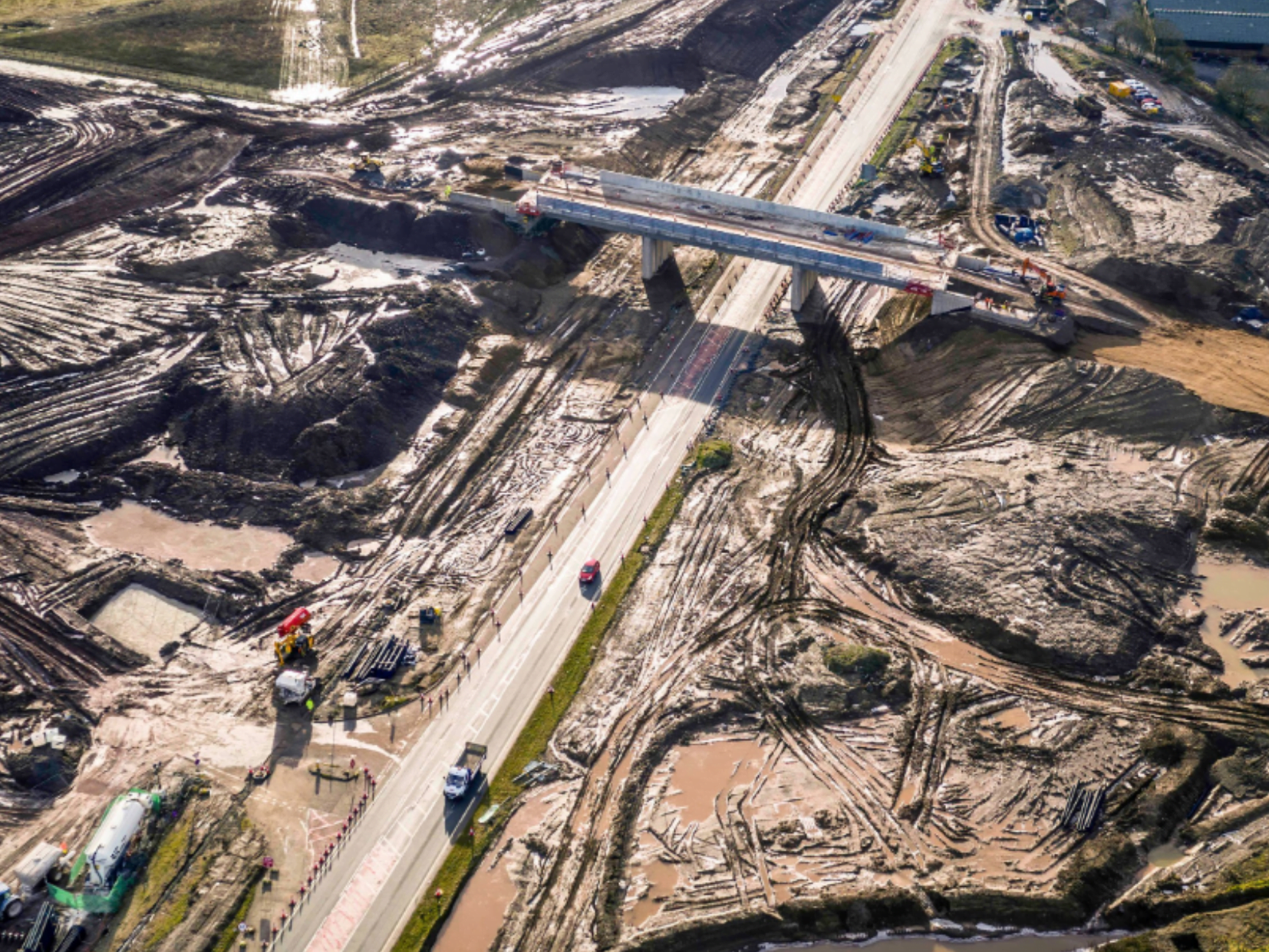
Scotland faces a huge bill to maintain the roads it already has, while billions more are committed to expanding road capacity. The estimated backlog in road maintenance has risen to around £2.5 billion, up by more than 47% from the £1.7 billion estimated in 2022. At a time of constrained public finances, we must question not simply how much Scotland spends on roads, but what that money is being spent on – and whether new road-building schemes are compatible with climate commitments when the existing network has such a substantial maintenance backlog.
Prioritising the repair and renewal of Scotland’s existing roads is a far more effective use of public funds than expanding road capacity. Maintenance investment safeguards the infrastructure that communities already depend on and improves user safety. The most cost‑effective, time‑efficient and sustainable approach for the Scottish Government is to carry out regular, preventative repairs that address road surface deterioration before it becomes severe. Once damage reaches the point of requiring full reconstruction, costs escalate, delays increase, and communities face prolonged disruption. The construction process itself is also carbon‑intensive, generating significant waste, and worsening local air pollution, with harmful consequences for public health.
Road maintenance must be paired with sustained investment in public transport alternatives that reduce congestion and offer people genuine modal choice. It is not enough to rely on a transition to electric vehicles, as while EVs produce fewer tailpipe emissions, they do nothing to reduce traffic volumes or road surface wear and tear. A strategy centred on repairing what we already have – and redirecting road building funds to provide viable alternatives to driving – delivers better value, lower emissions, and a more resilient transport system.
What has changed on traffic reduction?
In 2022, the Scottish Government published its route map for a 20% reduction in car kilometres by 2030. For the first time, reducing car use was explicitly recognised as a necessary part of tackling transport emissions, rather than relying solely on cleaner vehicles. There has been progress since then: free bus travel for under-22s, investment in active travel, Low Emission Zones and bus priority measures have all helped move Scotland towards a more sustainable transport system.
But in June 2025 the Scottish Government abandoned their target, stating that the 20% reduction in car use by 2030 was no longer achievable. Instead, it committed to developing a longer-term target aligned with net zero by 2045. This outcome is disappointing, as the need to reduce car use has not and will not go away simply because the original target has.
A new climate target
Scotland’s Climate Change Plan for 2026–2040 now sets a target to reduce emissions from cars by at least 16% during the first carbon budget period, 2026–30, compared with 2023 levels. The Plan also recognises that car mileage needs to fall, while at least 90% of new car sales need to be electric by 2030. The shift towards electric vehicles is important, but electrification alone will not solve Scotland’s transport problems. Electric cars still require roads and parking space – contributing to congestion and surface wear – and do nothing to make public transport, walking and cycling more attractive alternatives. The reliance on their uptake as an emissions‑reduction strategy places an unfair burden on people experiencing transport poverty, as it wrongly assumes private car ownership is universal, when for many households it is neither affordable nor accessible.
By their own reasoning the Government accepts that both electrification and reduced car mileage are necessary to achieve its climate objectives, but whether they are prepared to take the measures needed to reduce car mileage – and whether the Government’s transport investment decisions will support or undermine that objective is yet to be seen.
The A9: Billions more for road expansion
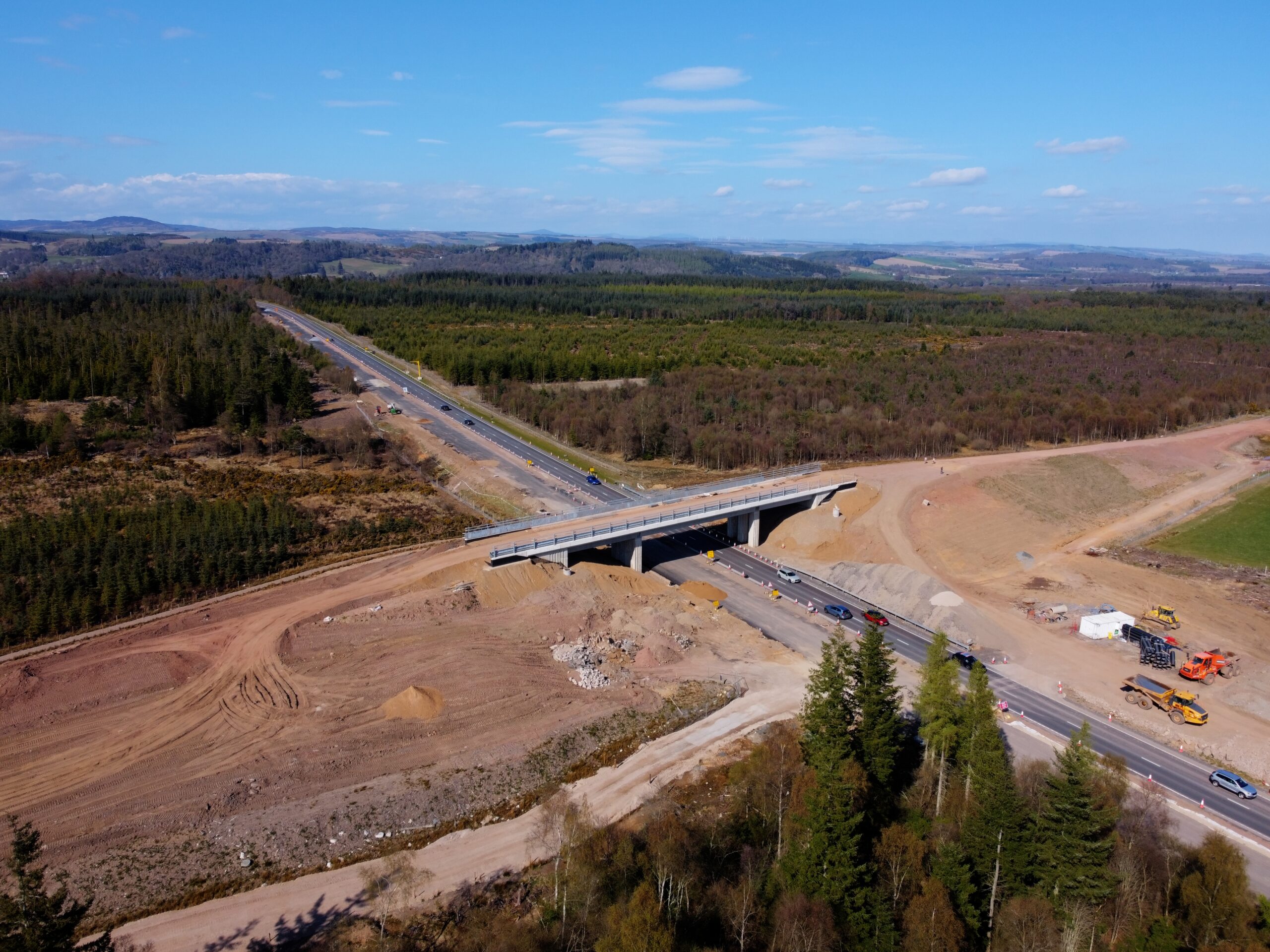
The continued commitment to road expansion is particularly stark in the case of the A9. In June 2026, Transport Scotland announced a £1.94 billion framework agreement to deliver the remaining sections of the A9 Dualling Programme, covering approximately 58 miles of road yet to enter procurement. This is not simply a historic commitment being wound down. Road-capacity expansion remains a major element of Scotland’s transport investment programme. The Scottish Government’s current plan is to complete the full 83-mile A9 Perth–Inverness dualling programme by the end of 2035, with an estimated programme cost of £3.97 billion at April 2025 prices. Five years after Roads to Ruin, Scotland is therefore not merely continuing with existing road-building commitments; major new spending is still being committed to expanding road capacity.
Where is the Car Demand Management Framework?
In Roads to Ruin, we argued that transport investment needed to be brought into line with Scotland’s climate commitments. Today, demand management remains unfinished business. The Scottish Government’s promised Car Demand Management Framework has not materialised in the form originally envisaged. Instead, the Government’s 2025 renewed policy statement commits to a regulatory check of existing powers for local road-user charging, place-based delivery plans, and a national communications campaign. The Government has also commissioned research examining fair and progressive approaches to demand management. That work considered options including local and national charging, although the Government has not adopted a policy of national road pricing.
This is welcome progress, but the test now is not whether Scotland can produce another strategy or research report, but whether it will use the powers already available to reduce car dependency and Scotland’s transport emissions.
What do we still need to see?
In 2024, we set out five steps that could deliver the traffic reduction Scotland still needs: a clear route to reducing car use, stronger bus priority, sustained investment in active travel, more affordable public transport, and an end to road-building programmes that generate more traffic. These priorities remain just as relevant today.
Scotland needs to make public transport cheaper and more reliable than private car use. We need to build safe, connected active travel networks at the scale required. We need to use parking policy and road-user charging where appropriate, with revenues invested in sustainable alternatives. And we need to stop spending billions on expanding road capacity while simultaneously asking people to drive less. Building new roads, or expanding capacity on existing ones, increases traffic by encouraging people to make trips they otherwise would not have made. This induced demand is well‑established: more road space generates more car use, increasing emissions and car dependency. In a climate emergency, it is therefore illogical for the Government to pursue major road‑building programmes such as A9 dualling, which undermine Scotland’s stated ambition to reduce car travel and cut emissions.
Furthermore, road expansion is not socially neutral. As Roads to Ruin highlighted, decisions about transport infrastructure affect different groups differently, including women and people on lower incomes, as wealthier members of society are more likely to use and benefit from new roads. Designing a transport system around accommodating more car traffic entrenches this inequality by reinforcing car dependency and limiting mobility choices for those who cannot drive. By contrast, investment in public transport, walking and cycling can provide people with more affordable, healthier and sustainable ways to travel. These modes broaden access to employment, education and services, helping to reduce social inequalities rather than deepen them.
Five years on
Five years after Roads to Ruin was published, Scotland has made progress. There is now greater recognition that reducing car use must be part of the response to the climate emergency, alongside making public transport and active travel more attractive. But the gap between policy and delivery remains. The Scottish Government’s 20% traffic reduction target has been dropped. Car demand management remains unfinished. The number of private cars on the road is at an all time high. And major road-building programmes continue to absorb billions of pounds of public investment.
Five years ago, our report warned that Scotland risked spending its way into greater car dependency at precisely the moment when it needed to do the opposite. Unfortunately, that warning still stands. Scotland needs a transport budget that prioritises healthier, more sustainable everyday journeys – not one that continues to expand capacity for traffic. The Scottish Government can continue with a transport system built around accommodating more road traffic, the most polluting sector of the economy, or it can use the powers and investment available to deliver a genuinely sustainable transport system that benefits all.